Monday, 26 April 2010


ON PAPER
A symposium exploring the meanings of the material page in the era of the digital text
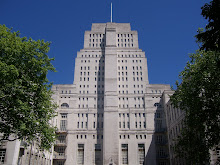
Friday 30 April 2010 Senate House, The Beveridge Hall
A day of short presentations and paper fondling. Respondent: Professor Esther Leslie.
Co-sponsored by In The Shadow of Senate House.
Sparked by thoughts on the situation of Senate House Library, financially beleaguered and facing spiraling costs for space and building maintenance, this symposium considers the world of the book and a world after the book. Recent strategy documents, in line with a wider rebranding of libraries, signal a continuing move away from book storage towards a new ethos of 'information work'. Increasing use of electronic texts not only enable the library to 'cease investing in the superseded' but also place 'pre-digital' holdings under a process of 'ongoing review'. Such statements do not mean that paper's disappearance is imminent, of course, but they might reveal something about its altered status in the digital era: the printed matter that formerly constituted the library now mainly constitutes a threat to its efficiency and financial viability, in other words. Friedrich Kittler has argued that paper's monopoly as a storage medium once rendered it transparent. In the age of its supposed technological obsolescence, by contrast, it seems likely to re-emerge in all of its singularity, its quirks, its limitations, and above all its material presence.
On Paper is a one day symposium inviting reflections on the now- 'superceded', 'pre-digital' page. Via short, research-based presentations, participants are invited to consider what is lost in the transition from page to screen, and in what ways our practices of literacy have been dependent on the material surface of paper. What role do the physical inscriptions and marks of typography and illustration play in a text's meaning? Should reading and writing be understood in corporeal, tactile or sensual terms as well as visual ones, or does our interaction with the medium of paper involve emotional or psychological investments that are even more difficult to quantify? And if (as anxieties about its storage attest) the printed page has physical dimensions as well as semiotic ones, then how can critical practice account for both? What kind of methodologies allow us to approach texts in with a sensitivity to their matter as well as their meaning? Finally, in what ways has literature either reflected on its own material medium, or imagined the paper archive? By thinking these issue across different periods and genres, the intention is to spark debate and dialogue about the place paper occupies in the current disciplinary practice of Literature.
Attendance is free but places are limited. Contact Dr Gill Partington or Dr Heather Tilley to register: g.partington@bbk.ac.uk or h.tilley@bbk.ac.uk

PROVISIONAL PROGRAMME:
10.30am Coffee and registration
11.00am WELCOME and opening remarks
11.15-12.15 PANEL 1: SERIALS / NEWSPAPERS / COMICS (Chair: TBA)
Tony Venezia (Birkbeck College), 'Alan Moore and the Material Text: The Case of The Mirror of Love'
Zara Dinnen (Birkbeck College), 'Object McSweeney's: Fetishising print in the Digital Age'
Laurel Brake (Birkbeck College), 'Paper Chains/Paper Dreams? Reading nineteenth-century serials online and on paper'
12.15-1.15pm Lunch (own arrangements)
1.15-1.45pm Book artist and graphic designer Linda Toigo will present some of her work
1.45-3.00pm PANEL 2: READING THE SURFACE (Chair: Joe Brooker)
Luisa Calé (Birkbeck), 'Reading and Cutting through the Surface: William Blake's extra-illustrated page from paper to print and screen'
Heather Tilley (Birkbeck College), 'The "feeling reader": embossed books for blind people in the nineteenth century'
Patrizia di Bello (Birkbeck), 'The Sculptures of Picasso with Photos by Brassai'
Henderson Downing (Birkbeck), '"A modernist collage of found objects": the Second Education of Iain Sinclair'
3.00-3.30pm Coffee
3.30- 4.30pm PANEL 3: MARKING THE SURFACE (Chair: Gill Partington)
Adam Smyth (Birkbeck College), 'Collage: Reconsidering Renaissance Writing'
Ros Murray (Kings College), 'Scrapings of the Soul: Artaud's Cahier 395' '
Anthony Bale (Birkbeck College), 'Medieval graffiti, Digitization and the Emotional Archive'
4.00-5.00pm Response from Professor Esther Leslie, followed by round table discussion.
6.00pm Wine reception
Supported by "In the Shadow of Senate House", Birkbeck College, and the National Research Training Scheme in English Language and Literature, Palaeography and the History of the Book administered by the Institute of English Studies, School of Advanced Study, University of London.

Saturday, 5 December 2009

Scrapers

Owen Hatherley will be talking about the absence/presence of British skyscrapers (as opposed to high-rises, a very different thing) as part of In The Shadow of Senate House. 11th December, 5pm in room 102, 30 Russell Square, Bloomsbury, London.

Thursday, 8 October 2009

Towers Open Fire


As Beveridge’s well-worn anecdote regarding the cab-driver and the Royal School of Needlework demonstrates, throughout the early twentieth-century there was a need to impress the University of London onto the cognitive maps of even the most cartographically astute Londoners. Consequently, a key aspect of the brief for Senate House involved constructing a tower that would establish the institution as a presence on the capital’s skyline. A decade or so later this desire for a notable landmark would inadvertently provide a useful guide for the Luftwaffe during their lethal bombing raids (leading to the oft-repeated urban myth that Hitler had favoured Senate House as a potential Nazi command post).

No architectural competition was held for Senate House. After the initial selectors shuffled through the remnants of a rather Edwardian directory to hedge their bets with fourteen possible architects, the final committee nominated a new short-list of four: Giles Gilbert Scott; Arnold Dunbar Smith; Percy Scott Worthington; Charles Holden. A combination of factors steered the selectors towards Holden. Championed by Beveridge from inside the committee and given influential external support by Frank Pick, Holden was the only candidate to bring preliminary sketches to the series of black-tie dinners held for each finalist at the Athenaeum. He had also recently designed 55 Broadway as the new tower-topped HQ for a rapidly expanding and modernizing London Underground. Completed in 1929 on a restricted site near St James’s Park, the dexterously monumental building not only proved that Holden could manage a large scale project but also suggested that he would bring to the design of Senate House a palatable modernity capable of communicating the progressive momentum of the University.

Holden was not the only short-listed candidate with a proven track record in designing towers. In 1903, at the tender age of 22, Giles Gilbert Scott had won the competition to design Liverpool Cathedral. Scott’s reputation rose alongside the cathedral as it began to take shape over the rooftops of Hope Street – albeit with his own telling redesign that replaced the original plan for twin towers with a massive central tower. A scion of a prolific architectural dynasty, Scott had the highest public profile on the Senate House short-list. A series of inter-war church commissions had made him one of the most sought after ecclesiastical architects of the period. Yet for those with a penchant for counterfactuals, it is the educational and industrial structures that Scott’s small office handled that encourages speculation on the likely form of his unbuilt tower for Senate House.

South London has offered fertile ground for Scott’s skyscraping landmarks. After construction had begun on J. Theo Halliday’s design for Battersea Power Station in 1929, Scott was brought in as consultant architect to finesse the detailing of the titanic brickwork exterior and chimneys. In 1932 he finished the William Booth Memorial Training College, another extended essay in brick with a massive tower that looms over the lost souls of Denmark Hill (shortly afterwards he completed the similarly monolithic ‘dark tower’ of Cambridge University Library – celebrating its 75th anniversary this month). A much later work than any of these is Bankside Power Station, designed by Scott a few miles downriver from the Battersea matrix.

As Cedric Price astutely observed, the slender square tower of Bankside (now glowingly Tate Modernized) sticks a brickwork middle finger up to St Paul’s Cathedral across the water. Could this have been an unconscious gesture of spiritual defiance from a Catholic architect who had intermittently spent his entire adult life attempting to terminate an Anglican edifice? Could the affable GG Scott have secretly been a repressed GG Allin of architecture? Or was that middle finger more emblematic of the unconvincing ‘middle line’ that Scott insisted on navigating between such phantom monoliths as modernism and tradition? (Rather than an answer to these questions, a neighbourly aside suddenly springs to mind: it should be noted that for almost forty years Cedric Price’s innovative architectural office operated just beyond Senate House on the corner of Alfred Place and Store Street.)

For those who find themselves in the shadow of Senate House there is a far easier way to visualize a possible version of what Scott’s tower would have looked like. It takes the form of the K6 phone-box located on the Malet Street side of the south block of Senate House itself. Mass-produced in 1936 as a more economic variant of the K2, the famously Soane-inspired kiosk was first sketched by Scott in the mid-1920s after he had been appointed a trustee of the Soane museum. During August of this year the Malet Street phone-box was given what appeared to be a sub-Sophie Calle makeover. Although I used to walk down Malet Street almost every morning, by the time I had registered the continued presence of a folding chair, cushions, and blanket inside the phone-box, the accompanying message handwritten on sheets of paper stuck to the kiosk’s rectangular glass panels had faded into illegibility.

Saturday, 3 October 2009

End of.


below or above, Southgate Tube Station was always a trip for a suburban teenager in the 1970s and ‘80s. Surfacing from the Piccadilly line entailed a vertiginous sweep up chocolately escalators, scattered with cigarette ends, and past lights emanating a dreamy glow that was seemingly from another century. Neared from street-level, it was even more delirious. At a certain moment the spinning-top peeked around the corner, pulsating from its non-stop roundabout. It was a circular beacon, with an electro-bauble on the top and dotted with myriad entrance-exits in between boutique shops that were not ever for the likes of pocket-moneyed me. Its seductive curve was mirrored on the other side of the bus lanes in the signaged-for-eternity shops of the Parade. Everything about it was transporting – and, for me, it was always the nearby lodestar of different sites of pleasuring: the swimming pool, first, then the cinema, then Soul and Rock and Roll Nights at the Royalty Ballroom, and finally, Our Price Records and punk gigs (compacting with the underground itself, one was by Moorgate and the Tube Disasters, who assaulted the audience with a pig’s head). Arnos Grove, by contrast, was sobering and, with no other buildings in the vicinity, a marooned planet. I think of it only as a glorious disc under vast suburban skies to be contemplated in a state of melancholy during the always too long sojourns at the bus stop opposite, the dazzle of the West End now far up the line, home a humdrum terminus.

Wednesday, 23 September 2009

Dorothy, a Secretary or a Spy?


"MI5 Files show how special branch feared uni administrator leaked to USSR

With a shock of unruly hair and an austere stare flashing through her tiny-framed glasses, Dorothy Galton was known at the University of London as a fearsome nit picker of a school secretary.
When she died in 1992, obituary writers could not help but mention her 'formidable' and 'autocratic' approach to the running of the School of Slavonic Studies in Senate House, Bloomsbury.
But files released this week by the National Archives show that MI5 thought she was far more dangerous than a bossy boots who simply berated students for wrongly filled out forms or overdue library books.
Special Branch officers thought Ms Galton was a spy.
The files reveal that for 20 years of her life she was tailed by secret agents who were convinced Ms Galton, who lived for several years in South Hill Park Gardens, Hampstead, was leaking information to Russia at the start of the Cold War.
Between 1932 and '36, she was openly a member of the St Pancras Communist Party, but gave up her subscription to conduct 'special research projects'.
This, the files show, aroused secret services' fears that Ms Galton, who had visited the USSR, had inappropriate access to sensitive information on armed forces personnel who enrolled at the university to quickly learn foreign languages.
Her phones were tapped and her mail was intercepted – although the messages that were discovered had little more information than her joy at riding a mini-motorbike and plans to buy a car and move to a cottage in Essex.
The files, which relate to surveillance carried out throughout the 1930s and 1940s, show how Special Branch officers tried to monitor the rise of Communist debates within the University.
They read 'A powerful personality in the school is the secretary, Dorothy Galton, a most unpleasant and seriously unbalanced woman and the only person in the place which makes a serious attempt at administration. She is by no means efficient, yet through her policy of interfering in every aspect of the school's activities, she exerts considerable influence. Most of the emigre East European students and some of the Americans were met by her with hostility but the Communists find in her a valuable friend.'
The documents, two beefy files of scribbled notes and typed dossiers which have been made available for download on the Public Records Office's website, show how 'discreet enquiries' were ordered to be carried out on the Hampstead neighbourhood where she lived. It was claimed by Special Branch that the NW3 district had many Communist sympathisers.
'We have proved that Miss Galton has access to restricted information', said one secret report. 'The most damning allegation is that the whole of the (School of Slavonic Studies) is unprotected from Miss Galton's 'snooping', or 'from the inquisitive gaze of the Russian intelligence.'
Another report said: 'It would seem wrong that a person of Miss Galton's record should have access to any classified information'.
While they suspected information was being siphoned out of the university's filing cabinets and to eastern Europe, the reports suggest that secret agents failed to find any conclusive proof.
Ms Galton retired from the school in 1961 and went on to keep bees in her retirement and wrote books on bees' wax and honey. She died aged 90 having never married, owned property or used a bank account."

Richard Osley, Camden New Journal 3/9/09